


Many hobbies today involve apps, streaming platforms, and digital devices. While technology offers convenience, analog hobbies continue to attract people who want hands-on experiences, creative expression, and a break from constant screen time. Activities such as photography, knitting, gardening, painting, journaling, and collecting can provide personal enjoyment while also holding long-term value. For women interested in starting a new pastime, approaching an analog hobby as an investment can help balance enjoyment, cost, and future potential.

What Makes an Analog Hobby Worth Investing In?
An analog hobby involves physical tools, materials, or activities rather than digital platforms. The value of these hobbies often extends beyond entertainment. They can support creativity, skill development, stress reduction, and social connection.
When evaluating a hobby, it is helpful to consider both financial and personal returns. Some hobbies may offer opportunities to sell finished products, while others provide lasting enjoyment that justifies the investment. The goal is to select an activity that fits your interests, budget, and available time.
A hobby that remains engaging over several years often delivers greater value than one that loses appeal after a few weeks. Starting with clear expectations can help prevent unnecessary spending and frustration.
Set a Realistic Budget
One of the most important steps is deciding how much money you are comfortable spending. Every hobby comes with different costs. Some require only basic supplies, while others involve specialized equipment.
Creating a budget before making purchases helps keep expenses under control. Beginners often benefit from starting with entry-level tools rather than purchasing premium equipment immediately. This approach allows you to explore the activity before making larger investments.
For example, someone interested in film photography may begin with used Canon cameras rather than purchasing expensive collector models. Starting small creates room to learn while reducing financial risk. It is also helpful to account for ongoing costs such as supplies, maintenance, classes, or storage.
Focus on Quality Over Quantity
Many hobbyists make the mistake of collecting large amounts of equipment before building skills. In most cases, a few dependable tools are more useful than a room filled with unused supplies.
Quality items often last longer and provide a better experience. A well-made knitting needle set, durable gardening tools, or reliable paintbrushes can support years of use. Purchasing thoughtfully selected equipment may reduce replacement costs over time. Before buying new items, research product reviews, ask experienced hobbyists for recommendations, and consider whether the purchase serves a specific purpose.
Consider Long-Term Value
Some analog hobbies involve items that may retain value or even appreciate over time. Vintage cameras, collectible books, antique sewing machines, artwork, and certain crafting tools can attract interest from collectors.
However, financial gain should not be the primary reason for choosing a hobby. Market values can change, and future demand is difficult to predict. Personal enjoyment remains the most reliable return on investment. If collecting is part of your hobby, keeping items in good condition and maintaining records of purchases can support future resale opportunities.
Build Skills Before Expanding
Developing skills often creates greater value than purchasing additional equipment. A skilled gardener can produce impressive results with basic tools. An experienced painter can create meaningful work using a limited set of materials.
Investing in classes, workshops, books, or local community groups can provide benefits that equipment alone cannot offer. Learning from others can help you avoid common mistakes and gain confidence more quickly.
Many hobby communities also offer opportunities to share ideas, exchange supplies, and connect with people who have similar interests. These relationships often become one of the most rewarding parts of the experience.
Avoid Trend-Driven Spending
Social media can make certain hobbies appear expensive or highly competitive. It is easy to feel pressure to purchase the latest tools, supplies, or accessories. A hobby should fit your goals rather than online trends. Before making a purchase, consider whether it will genuinely improve your experience or simply add clutter. Taking time to evaluate purchases often leads to better financial decisions. Building a hobby gradually allows you to identify what you truly need while avoiding unnecessary expenses.
Analog hobbies offer a unique combination of creativity, learning, and personal fulfillment. Whether you enjoy photography, crafting, gardening, writing, or collecting, thoughtful investment can help you get the most from the experience. A clear budget, quality tools, steady skill development, and realistic expectations create a strong foundation for a hobby that remains enjoyable for years to come. To learn more about analog hobbies and their cost, feel free to look over the accompanying infographic below.
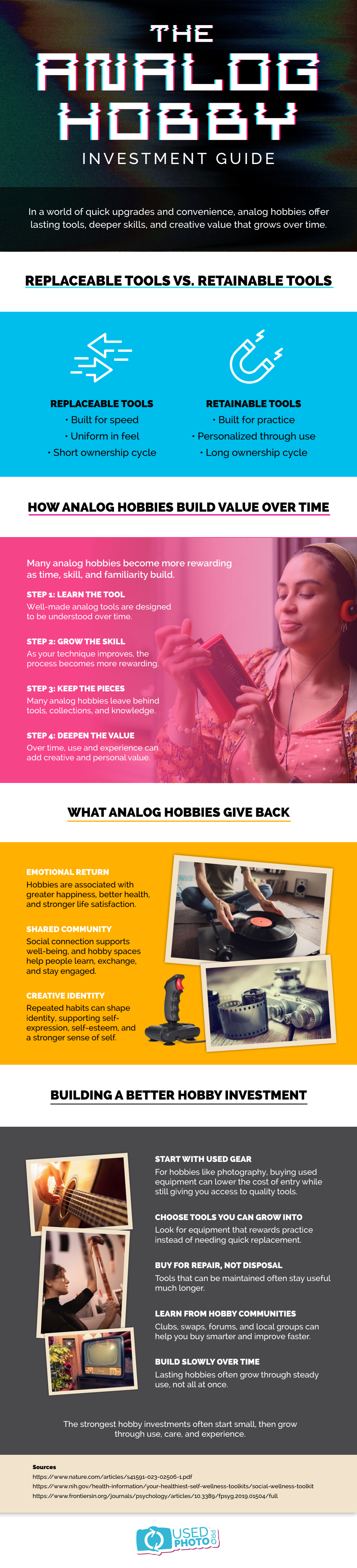
Photo by Adrian Korte on Unsplash
